

In the vast landscape of narrative creation, from blockbuster Hollywood films to timeless novels, one framework has consistently proven its power: the three-act structure. This isn’t a rigid cage, but rather a flexible and foundational guide that empowers storytellers to craft narratives богатые (rich in) depth, engagement, and emotional resonance. Understanding and utilizing this structure can significantly elevate your storytelling, whether you’re a budding screenwriter, a novelist, or even a marketer crafting a brand story.
What is the Three-Act Structure?
At its core, the three-act structure divides a story into three distinct yet interconnected segments:
Act 1: The Setup (The Beginning)
-
- Purpose: This act introduces the story’s world, the main characters (especially the protagonist), and establishes the initial premise. Crucially, Act 1 presents an inciting incident – an event that disrupts the protagonist’s ordinary life, launching them into a new journey or presenting a problem they must confront.
- Key Elements: Character introductions, setting the scene (world-building), establishing the story’s tone, and hinting at underlying conflicts. Act 1 typically concludes with the First Plot Point, where the protagonist makes a critical decision or is irrevocably thrust onto a new path, fully committing to their journey.
Act 2: The Confrontation (The Middle)
-
- Purpose: This is often the longest and most complex act. The protagonist faces a series of escalating challenges, obstacles, and conflicts as they strive to achieve their goal. They might encounter allies and enemies, and undergo significant personal changes in understanding or skill.
- Key Elements: Rising action, conflict development, character development (learning and growing, or failing and falling), subplots unfolding and often intertwining. This act usually features a Midpoint – a significant event that often changes the stakes, provides new insight, or represents a point of no return for the protagonist. Act 2 culminates in the Second Plot Point, often the protagonist’s lowest moment, where all hope seems lost, setting the stage for the final showdown.
Act 3: The Resolution (The End)
-
- Purpose: This act brings the story to its ultimate conclusion. The protagonist confronts the main antagonist or the central conflict head-on in the Climax. Following the climax, remaining plot threads are tied up, the characters’ fates are revealed, and the story’s central theme is often crystallized.
- Key Elements: Climax (the ultimate confrontation), falling action (the immediate aftermath of the climax), and denouement (the final resolution and the establishment of a “new normal”). The audience experiences the consequences of earlier actions and, ideally, a sense of satisfaction or catharsis as the narrative closes.
The Indispensable Role of the Three-Act Structure in Storytelling
The three-act structure is a cornerstone of effective storytelling for several key reasons:
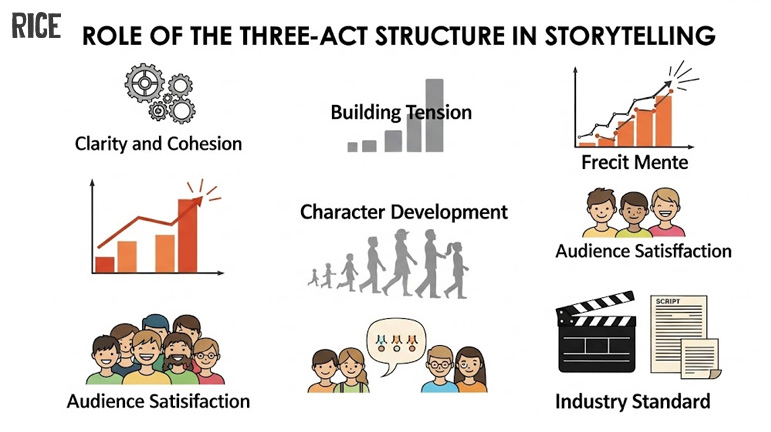
- Provides Clarity and Cohesion: It offers a solid “skeleton,” helping writers organize ideas and plot points logically, making the story easy for the audience to follow and comprehend.
- Builds Tension and Dramatic Pacing: By systematically escalating challenges and conflicts in Act 2, this structure keeps the audience engaged and invested, leading to a more impactful climax.
- Facilitates In-Depth Character Development: The journey through three acts provides ample space for characters to face adversity, learn, change, and grow. This makes characters more believable, relatable, and memorable.
- Delivers Audience Satisfaction: A story that resolves its conflicts and themes effectively in Act 3 (whether a happy or tragic ending) generally provides a sense of completion and emotional satisfaction for the audience.
- Serves as an Industry Standard: In creative industries like film, television, and publishing, the three-act structure is a widely understood concept, facilitating communication and collaboration among creators.
When Should You Use the Three-Act Structure?
While powerful, the three-act structure isn’t the only way to tell a story, nor is it mandatory for every narrative. However, it’s particularly beneficial in these scenarios:
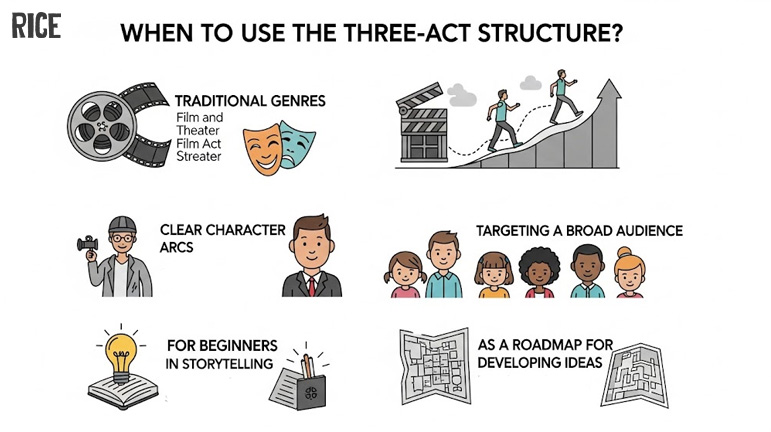
- Traditional Genres: Action, adventure, romance, comedy, thriller, sci-fi, and many mainstream fiction genres often thrive on the clarity and momentum the three-act structure provides.
- Stories Focused on Clear Character Arcs: If your narrative centers on the protagonist’s journey of transformation and growth, this structure offers an ideal framework.
- Targeting a Broad Audience: The familiarity of this structure makes stories more accessible and easily digestible for a wide range of viewers or readers.
- For Beginners in Storytelling: It’s an excellent tool for learning the fundamentals of crafting a compelling and well-organized narrative.
- As a “Roadmap” for Developing Ideas: Even experienced writers and filmmakers often use the three-act structure as a starting point to outline and shape their stories, which they might later adapt or intentionally subvert.
Important Considerations
- Not a Rigid Formula: The three-act structure is a guide, not an unbreakable set of rules. Talented storytellers often adapt, expand, or even subvert its elements to create novelty and surprise.
- Flexible Act Lengths: While Act 2 is often the longest, the exact proportions can vary depending on the specific needs of the story.
- Your Story is Paramount: Structure is merely a tool. The most critical elements remain a unique idea, compelling characters, and an engaging narrative voice.